Close

Dr Roushanak Rahmat

Principal AI Architect & Strategist

Google Developer Expert (AI & Cloud)

Download Resume

About Me

Roushanak is a PhD-qualified Principal AI Leader and Google Developer Expert (GDE) with 10+ years of deep expertise in developing, architecting, and deploying enterprise-scale Generative AI, Agentic AI, and Deep Learning solutions across finance, energy, and healthcare sectors.


She has proven success in shaping AI strategy and transformation roadmaps for C-suite executives, resulting in measurable improvements in efficiency and profitability. Recognized as a Top 100 Woman in Tech and a US Patent inventor, she drives responsible innovation, technical excellence, and talent mentorship within high-performing global teams.


She is an active Google Developer Expert (AI & Cloud) and Google Women Techmakers Ambassador. She regularly speaks at Google developer groups, AI summits, and tech meetups, and shares her knowledge through a published technical blog, Youtube, and open-source contributions on Github.

Experience

IBM,

London, UK

Principal AI/GenAI Architect & Consultant

Served as the primary technical expert and AI Architect to C-suite and executive stakeholders for major clients, driving strategic GenAI roadmaps and maximising business value. Architected end-to-end AI systems using LLMs, Retrieval-Augmented Generation (RAG), and multi-agent orchestration frameworks.

QAHE Associate Professor,

UK

Associate Professor (for Ulster, Solent, Roehampton, Middlesex Universities)

Directed instruction delivery for high-demand Computer Science modules, consistently earning top student evaluations. Spearheaded talent development by supervising over 100 dissertations.

Elekta,

UK

Principal AI/ML Scientist & Innovator

Pioneered and deployed mission-critical Deep Learning and Computer Vision solutions for radiotherapy systems, enhancing clinical product efficacy. Innovated core AI algorithms for medical imaging, resulting in multiple US patents for advanced image reconstruction and segmentation.

The Institute of Cancer Research,

University of London, UK

Lead AI Research Scientist, Artificial Intelligence

Pioneered a hybrid Deep Learning model for high-accuracy, early lung cancer detection, successfully integrating multi-modal data streams including CT scans. Published high-impact research in peer-reviewed journals, focusing on the application of Computer Vision and AI in oncology.

University of Cambridge

Cambridge Brain Tumour Imaging Laboratory, UK

AI Innovation Specialist in Healthcare

Developed and deployed advanced Deep Learning and computational imaging solutions, specialising in high-accuracy glioma tumour image segmentation. Engineered AI models to not only segment tumour shape but also provide predictive analysis of tumour recurrence.

Queens’ College,

University of Cambridge, UK

Postdoctoral Research Associate, Deep Learning in Medical Imaging

Awarded highly selective Postdoctoral Scholar position (1 of 10 global), validating scientific excellence.

Amirkabir University of Technology

Image Processing & Pattern Recognition Laboratory, Iran

Visiting Scholar, Artificial Intelligence in Image Analysis

University of St. Andrews,

School of Computer Science, UK

Data Scientist

Spearheaded the development and deployment of a mobile application (Android) in partnership with the School of Geography for city designs, and led a team to create the Arclight Android app for early glaucoma detection in developing countries.

Heriot-Watt Univerity, UK

Teaching Assistant

Courses: Signal Processing, Digital Image Processing, Circuit Analysis, C++

University Technology Petronas, Malaysia

Teaching Assistant

Courses: Numerical Methods, Signals and Systems, Image Processing

Alcatel-Lucent, Malaysia

Intern Engineer, Telecommunication

Education

Heriot-Watt University in collaboration with The University of Edinburgh

PhD in AI: Image Processing & Computer Vision

Institute of Sensors, Signals and Systems – Institute for Digital Communications – Cancer Research Center

Oxford Machine Learning Summer School

International Computer Vision Summer School

University Technology Petronas

MSc by Research, Image Processing

Department of Electrical & Electronics Engineering

University Technology Petronas

BEng(Hons), Electrical & Electronics Engineering (Instrumentation & Control)

Department of Electrical & Electronics Engineering

Projects

AI online course

Designed and created an online intermediate-level course covering the principles of AI. This consists of video lectures (in the topics of: CNN, RNN, NLP and GAN), python coding lectures, coding assignments and quizzes in each module.

View Project

Deep learning for survival prediction

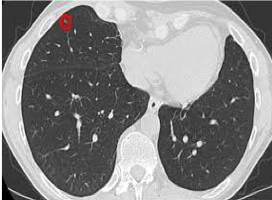
Built a novel deep learning architecture for early detection of cancer. Predicting site of lung cancer initiation and progression using merged image screening and patient’s demographic data in one network (NLST dataset).

Deep learning for vessel tree segmentation

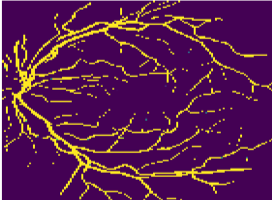
Studied differet types of U-net model for the retina vessel segmentation application.

Automatic computational analysis of multi-modal brain tumour imaging

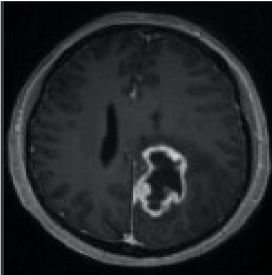
Developed and applied image segmentation models, in particular deep learning, for automatic segmentation of glioma and vestibular schwannoma before treatment and prediction of progression pattern after treatment, using conventional structural and diffusion tensor images

View Project

New level set model in follow up radiotherapy image analysis

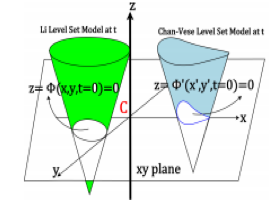
Developed new level set segmentation model with the least amount of dependency to its parameter settings

View Project

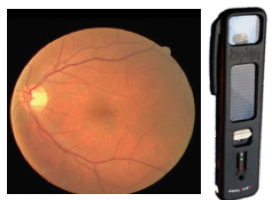
Automatic segmentation of optic nerve using Archlight images

Automatic segmentation of the optic nerve’s (to calculate cup to disc ratio) for earlier detection of glaucoma.

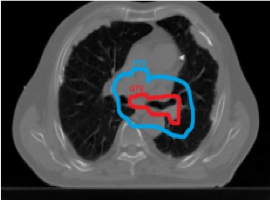
Monitoring of lung cancer patients during radiotherapy using combined texture and level set analysis of CBCT Images

View Project

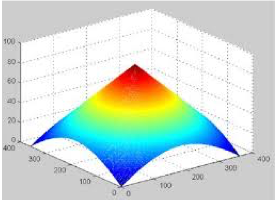
3D shape reconstruction using shape from focus

Recovering the depth information of an object from a sequence of 2D images with varying focus is known as shape from focus.

View Project

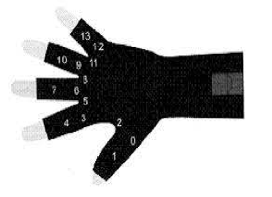
Online signature verification (by data glove) using SVD

The SVD technique is used to find r-singular vectors sensing the maximal energy of the signature data using data glove.

View Project

Skills

Generative AI & LLMs

  • Generative AI (LLMs, RAG, Agent Frameworks, Function Calling)
  • Prompt Engineering
  • LangChain, LangGraph, Agentspace
  • Gemini, ChatGPT, Amazon Bedrock
  • MCP, ADK, A2A

Cloud Platforms

  • GCP (Expert): Vertex AI, BigQuery, Looker, Compute Engine
  • AWS, Azure, IBM watsonx

MLOps

  • CI/CD, Docker, Terraform
  • Kubeflow, Git, GitHub, Airflow

Programming (Expert)

  • Python (TensorFlow, Keras, PyTorch, Pytest)
  • Pandas, Numpy, Scikit-Learn, SciPy, Matplotlib
  • C/C++, Java, MATLAB, R

Machine Learning

  • Deep Learning, NLP, Computer Vision
  • Time Series Analysis, Reinforcement Learning, Anomaly Detection

Tools and Databases

  • SQL (Advanced): PostgreSQL, MySQL
  • Vector Stores (ChromaDB, AlloyDB, BigQuery)
  • ETL/ELT, Data Warehousing, PowerBI

Specialised & Methodologies

  • Medical Imaging (FSL, 3D Slicer, ImageJ)
  • Agile, Jira, Confluence, IBM Garage

Intellectual Property & Publications

Intellectual Property (US Patent Applications)

1. Rahmat R, et al., Techniques for processing CBCT projections. US Patent App. 18/157,524 (2024).

2. Rahmat R, et al., Techniques for removing scatter from CBCT projections. US Patent App. 18/157,504 (2024).

3. Rahmat R, et al., Techniques for adaptive radiotherapy based on CBCT projection correction and reconstruction. US Patent App. 18/157,531 (2024).

Peer-Reviewed Publications

4. Rahmat R, et al., Radiomics-Led Monitoring of Non-small Cell Lung Cancer Patients During Radiotherapy. In 25th Annual Conference on Medical Image Understanding and Analysis 2021 (pp. 532-546). Springer.[Publisher's link] [Bibtex]

5. Wan Y, Rahmat R, Price SJ. Deep learning for glioblastoma segmentation using preoperative magnetic resonance imaging identifies volumetric features associated with survival. Acta Neurochirurgica. 2020 Jul 13:1-4.[Publisher's link] [Bibtex]

6. Rahmat R, Saednia K, Khani MR, Rahmati M, Jena R, Price SJ. Multi-scale segmentation in GBM treatment using diffusion tensor imaging. Computers in Biology and Medicine. 2020 May 22:103815.[Publisher's link] [Bibtex]

7. Stefani A, Rahmat R, Harris-Birtill D. Autofocus Net: Auto-focused 3D CNN for Brain Tumour Segmentation. InAnnual Conference on Medical Image Understanding and Analysis 2020 Jul 15 (pp. 43-55). Springer, Cham. [Publisher's link] [Bibtex]

8. Rahmat R, Brochu F, Li C, Sinha R, Price SJ, Jena R. Semi-automated construction of patient individualised clinical target volumes for radiotherapy treatment of glioblastoma utilising diffusion tensor decomposition maps. The British Journal of Radiology. 2020 Apr;93(1108):20190441.[Publisher's link] [Bibtex]

9. Rahmat R, Harris-Birtill D. Comparison of level set models in image segmentation. IET Image Processing. 2018 Aug 28;12(12):2212-21.[Publisher's link] [Bibtex]

10. Rahmat R, Nailon WH, Price A, Harris-Birtill D, McLaughlin S. New level set model in follow up radiotherapy image analysis. InAnnual Conference on Medical Image Understanding and Analysis 2017 Jul 11 (pp. 273-284). Springer, Cham.[Publisher's link] [Bibtex]

11. Rahmat R. Monitoring of lung cancer patients during radiotherapy using combined texture and level set analysis of CBCT images (Doctoral dissertation, Heriot-Watt University)[Publisher's link] [Bibtex]

12. Rahmat R, Yang F, William WH, McLaughlin S. Lung Tumour Segmentation using a Combined Texture and Level Set [Publisher's link]

13. Rahmat R, Malik AS, Kamel N, Nisar H. 3D shape from focus using LULU operators and discrete pulse transform in the presence of noise. Journal of visual communication and image representation. 2013 Apr 1;24(3):303-17.[Publisher's link] [Bibtex]

14. Rahmat R, Mallik AS, Kamel N, Choi TS, Hayes MH. 3D shape from focus using LULU operators. InInternational Conference on Advanced Concepts for Intelligent Vision Systems 2012 Sep 4 (pp. 237-245). Springer, Berlin, Heidelberg.[Publisher's link] [Bibtex]

15. Rahmat R, Malik AS, Faye I, Kamel N, Nisar H. An overview of LULU operators and discrete pulse transform for image analysis. The Imaging Science Journal. 2013 Feb 1;61(2):146-59.[Publisher's link] [Bibtex]

16. Rahmat R. Shape from Focus Using Lulu Operators and Discrete Pulse Transform in the Presence of Noise. [Publisher's link]

17. Rahmat R, Malik AS, Kamel N. 3-D content generation using optical passive reflective techniques. In2011 IEEE 15th International Symposium on Consumer Electronics (ISCE) 2011 Jun 14 (pp. 639-642). IEEE. [Publisher's link] [Bibtex]

18. Rahmat R, Malik AS, Kamel N. Comparison of LULU and median filter for image denoising. International Journal of Computer and Electrical Engineering. 2013 Dec 1;5(6):568.[Publisher's link] [Bibtex]

19. Rahmat R, Kamel NS, Yahya N. Principle Subspace-Based Signature Verification Technique using Reduced Sensors Data Glove. In2009 Innovative Technologies in Intelligent Systems and Industrial Applications 2009 Jul 25 (pp. 317-321). IEEE.[Publisher's link] [Bibtex]

20. Rahmat R, Kamel NS, Yahya N. Subspace-based signature verification technique using reduced-sensor data glove. In2009 IEEE Symposium on Industrial Electronics & Applications 2009 Oct 4 (Vol. 1, pp. 83-88). IEEE.[Publisher's link] [Bibtex]

21. Rahmat R, Online Signature Verification using SVD Method.[Publisher's link]
Get in Touch